
Living Alone With a Cat: Company, Space and a Backup Plan
An extra bowl by the sink. A small shape on the chair you were about to use. Living alone with a cat changes the details of a home long before it changes the way you describe your life.
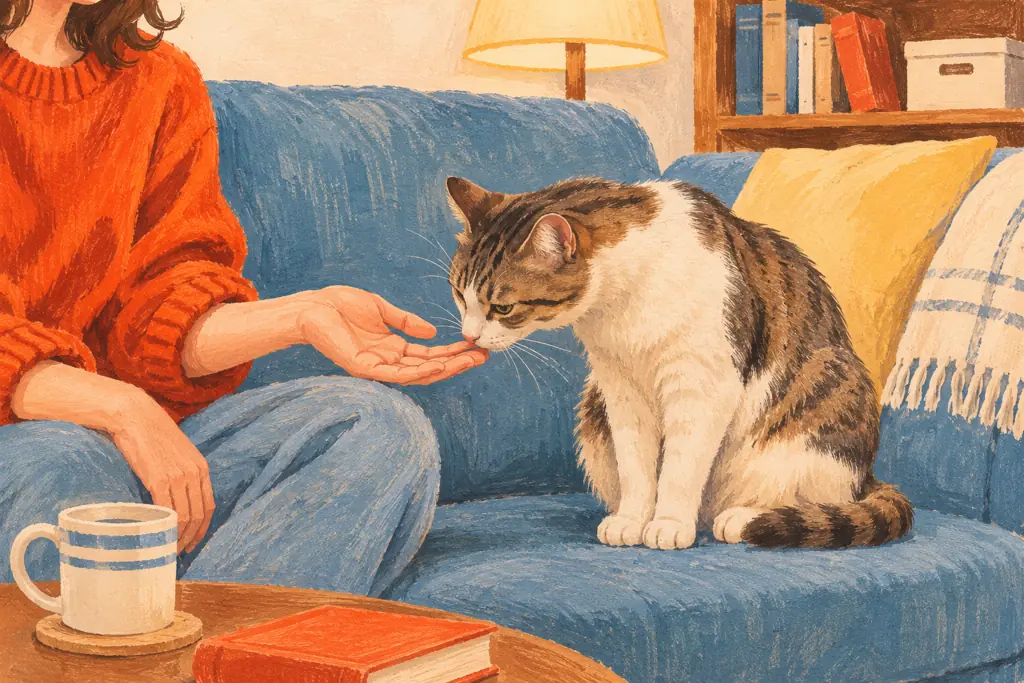
A home can feel inhabited in small ways
There may be someone waiting near the door when you get back. There may also be someone asleep in the laundry who does not get up at all. Both belong to the ordinary texture of sharing a place with a cat.
The comforting part is often less dramatic than a perfect photograph: hearing a cat move around while you make dinner, leaving room for them on the sofa, finding that the evening now has a few familiar pauses. You are allowed to value that without claiming it fixes every difficult feeling.
Make room for two sets of preferences
Before filling a small home with new purchases, look at how you both use it. Your cat needs accessible essentials, places to rest and opportunities for play and scratching. You need somewhere to eat, work and sleep without negotiating every inch.
Keep doors from trapping your cat away from water or the litter box. Leave a comfortable resting spot near you without making it the only option. If you share a studio, a clear route matters as much as a pretty corner. Our small-apartment litter-box guide helps compare the trade-offs.
Put another person in the plan before you need one
The practical difficulty of living alone is that an ordinary delay can affect the whole routine. A late train, an unexpected hospital visit or a broken lock is easier to handle when someone already knows what to do.
- Choose a reliable person who has agreed to help, and arrange safe access.
- Show them the food, litter supplies and carrier rather than relying on a long text later.
- Write down the veterinary contact, your contact details and the usual routine.
- Explain where your cat tends to hide and which doors need particular care.
- Keep any medication instructions tied to the actual veterinary plan.
Use our free handover sheet to keep the useful details together. Do not leave private door codes on a document you share publicly.
You can still have an evening that is yours
Once you have checked the essentials and made an appropriate care arrangement, an evening out does not need to become a referendum on whether you are a good cat person. Caring for an animal is a responsibility; trying to be available every second is a different expectation.
Plan absences around your individual cat’s care needs, age and health. Arrange reliable visits or other suitable care when you are away. If your schedule changes often, make the backup arrangement part of your normal budget rather than something improvised at the door.
A useful question for the weekend
Walk through your home as if you were the person coming to help tomorrow. Can you find the scoop, the carrier and the right food without opening every cupboard? Is there a clear note about whom to call?
Then return to the more enjoyable question: where do the two of you seem most comfortable spending an ordinary evening? A home that works for you both has room for those practical details and those unremarkable, rather lovely moments of company.