
Juno’s Four Difficult Days: White Foam, a Late-Night Visit, and Eating Again
The first thing I noticed was not the vomit. It was Juno pulling away from a brush he would usually enjoy. These are my notes from the four days that followed.
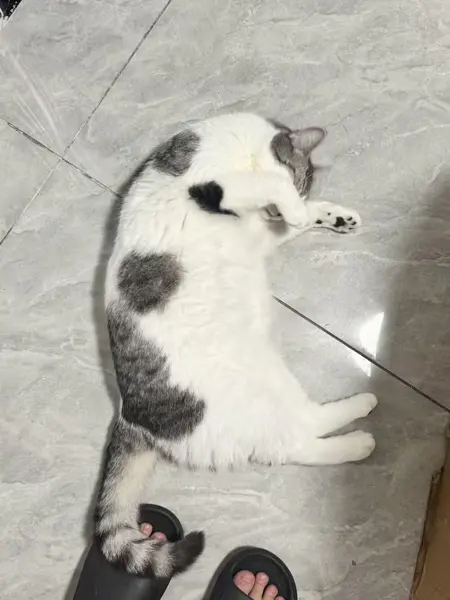
Day 1: The brush was suddenly unwelcome
At about eight in the evening, I was brushing Juno. Usually he would stay still and purr, apparently enjoying every minute. This time he kept making a low, unhappy sound, wriggled free and ran off.
That was when I noticed that the food I had topped up in the afternoon hardly seemed to have gone down. Then I heard him repeatedly licking his lips in the next room. When I went to look, there were two patches of white foam on the floor.
He had done something similar before, so I thought he might be trying to bring up a hairball. That was my assumption at the time. I brought him onto my bed that night. He still seemed reasonably alert.
Day 2, early morning: Food and water stayed untouched
A little after four in the morning, I heard him vomiting and got up immediately. There were another two patches of white foam, and he looked unwell. I put him in a separate room with a litter tray, water and food, planning to look at his condition again when I woke.
At eight, I found that he had vomited again. His urine and stool in the tray looked normal to me, and the stool was formed. But he had not touched the water or food.
I searched online and began to suspect gastroenteritis. I had checked his temperature and thought it was normal, perhaps even a little low. There was no fever or diarrhea at that point. This was my own interpretation of what I was seeing, not a confirmed diagnosis.
Day 2, daytime: Trying things and watching the clock
I bought omeprazole and gave it to him. Around three hours later, he vomited white foam again. In between, he chose to drink a little water. I gave omeprazole again around midday, using an amount I had calculated from his weight. Roughly three hours later he vomited again, followed by another episode around five in the afternoon. He was still walking around the house and seemed fairly alert.
In the evening I mixed amoxicillin–clavulanate into a lickable cat treat. He did not vomit after that. Two hours later I mixed half a sachet of Mamiai, a probiotic product, with 5 ml of water and gave it by syringe. Within about two minutes, he brought it back up.
Day 2, late night: We went to the 24-hour clinic
I kept him in a separate room again that night with a litter tray and water. I put one small blanket underneath him and another around him, and placed a hand warmer set to 40°C near his belly. I set alarms to check on him every hour.
At 11:50 p.m., I heard him vomit again. There were two more patches of white foam, and now there was watery stool in the litter tray. His gums felt sticky to me, and the skin I gently lifted at his neck seemed slower to settle back. I was frightened that he might become more dehydrated overnight, so we went to a 24-hour veterinary clinic.
Once inside, he suddenly seemed full of energy. He ran around, and during the examination two people struggled to hold him still. It was such a contrast to the cat I had been watching at home.
The tests available overnight were limited. As I understood the visit, the clinic’s checks ruled out the infectious conditions they tested for, including feline panleukopenia. I remember being told he was mildly dehydrated and to take him home and observe him for another day. This is my recollection of that visit, rather than a transcript of the clinical record or a claim that every infection had been excluded. He seemed lively on the way home.
Day 3: No vomiting, but still not himself
He did not vomit all day. Even so, he looked much worse to me: either lying down or tucked into a loaf, looking uncomfortable. The absence of another puddle did not make him seem like his usual self.
I bought a vitamin-and-glucose powder, diosmectite and oral rehydration salts from a pharmacy. I did not give omeprazole that morning because I suspected it might be behind the vomiting after the previous doses. That suspicion was never confirmed.
Morning and evening, I gave the antibiotic mixed into a cat treat, putting a little at a time into his mouth with my finger for him to lick away. He did not vomit. I prepared the glucose and oral rehydration salts separately, using the mixing proportions I was following then. Every one to two hours I alternated syringe-giving 10 ml of those preparations, hoping to provide energy and fluid. That was how most of the day passed.
That evening he passed watery stool again, and I gave half a sachet of diosmectite. Around eight, he drank water on his own and ate a little lickable treat. Those small voluntary mouthfuls felt significant after the day we had had.
Day 4: Breakfast again
At about seven in the morning, Juno drank and ate some dry cat food. I gave half a sachet of Mamiai. By midday, he seemed completely back to normal to me.
That is where this record ends. I do not have a confirmed cause to add, and I cannot tell from the sequence which, if any, product contributed to his recovery. I can say that I was very relieved to see him eat again.
A personal record, not a treatment guide
This diary recounts one past illness in our own cat, based on my observations and recollection. It is not a veterinary case report, a confirmed diagnosis or a treatment protocol. The medicines, quantities, syringe-giving and warming described above are things I did at the time, not instructions to repeat. Every cat’s circumstances are different; Juno’s apparent recovery does not establish that those actions were safe, necessary or effective. Please do not use this diary to diagnose or treat another cat or delay veterinary care. Decisions about medicines, fluids, feeding and warming belong with that cat’s veterinarian.